
Every horse is built differently — and their saddle should reflect that.
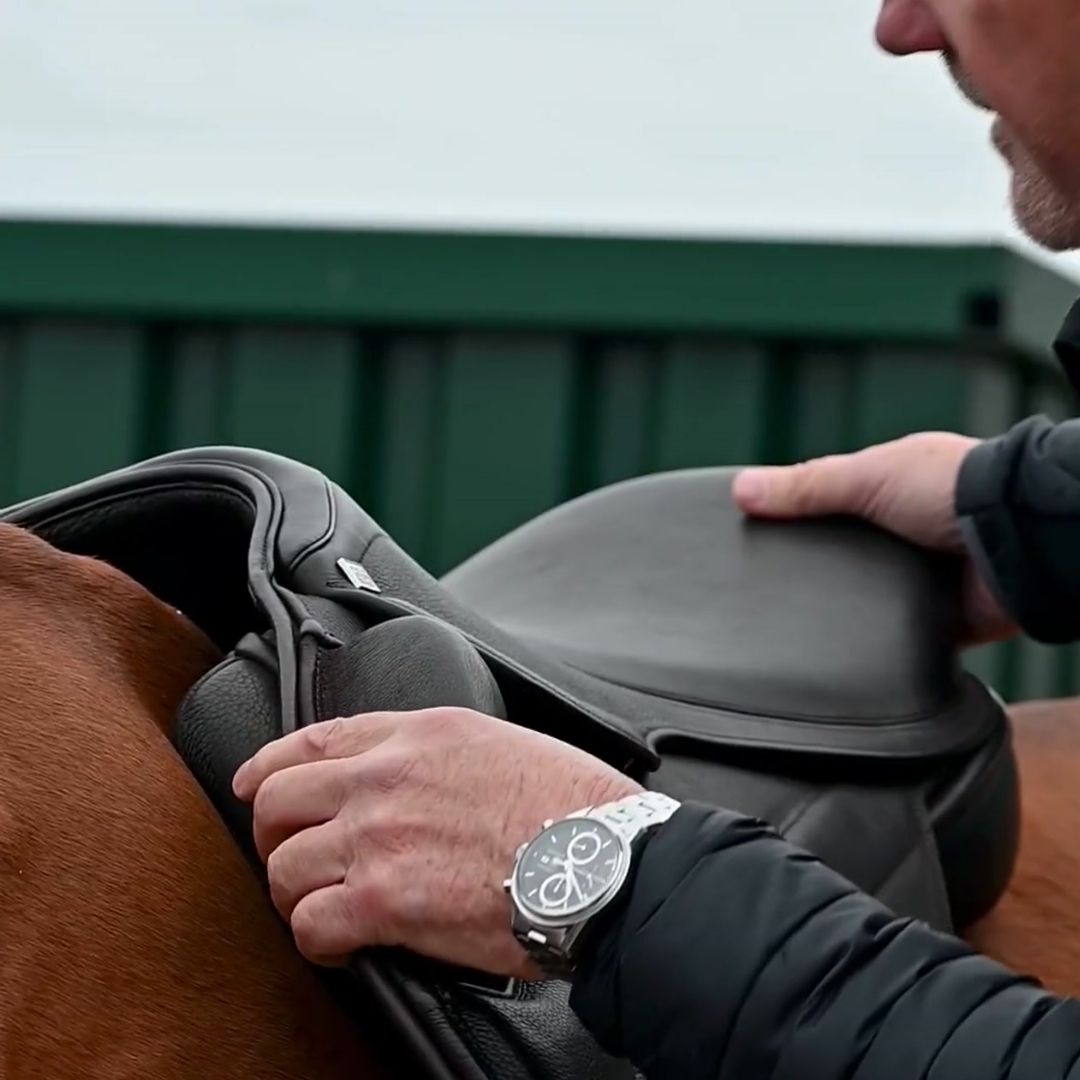
High withers, broad shoulders, or flat backs all influence how a saddle sits. Understanding conformation ensures comfort, movement, and long-term welfare.
Every horse is unique, not only in temperament but in body shape and conformation. Each structural difference can influence how a saddle sits, balances, and distributes weight. Understanding these factors is essential.
At GFS, we view conformation as the foundation of saddle fit — because no adjustment or design can compensate for ignoring the horse’s natural structure.
Common Conformation Challenges
High Withers
- Can cause the saddle to bridge as the saddle needs to provide clearance.
- May require a saddle with higher pommel height or shaped panels to avoid pressure.
Broad or Sloping Shoulders
- Restricts forward panel clearance.
- Saddle needs to accommodate shoulder movement for unrestricted movement.
Narrow or Flat Backs
- Can make it difficult to distribute weight evenly.
- Tree and panel design must ensure stability without concentrating pressure in certain areas
Asymmetrical Musculature
- Often the result of training, past injury, or natural development.
- Panels may need adjustment or padding to balance weight distribution.
Even subtle mismatches between saddle and horse conformation can cause:
- Pressure points leading to soreness or tension
- Resistance or behavioural issues under saddle
- Compensatory movement patterns that affect performance
- Long-term back or joint issues
Not all conformation challenges can be fixed with adjustments alone. Sometimes the saddle design itself must match the horse’s shape. Regular reassessment is key, particularly as horses develop, strengthen, or change workload.
Conformation isn’t a limitation — it’s a guide. By recognising and accommodating each horse’s unique structure, riders ensure the saddle supports comfort, movement, and a healthy, happy partnership.
